
Nuclear Data Centres
Tailwinds like cloud computing, AI, and the broad digitization of the world are skyrocketing demand for data centres. Let's explore how the world plans to keep up with this demand.


OpenAI and Anthropic will be heading towards an IPO this year, slating to be trading at trillions in value. This will continue to fuel the growth of AI, however, the growth of AI also means the need for growth of the inputs—energy.
Quantifying the Current Market
Currently, the data centre market is valued at US$301.8 Billion and expected to grow at a compound annual growth rate (CAGR) of 10.5% between 2024-2030 to reach US$622.4 by the end of this period. This is by no means a small number. Further, KKR published an analysis to understand the drivers making the data centre market an attractive investment.
First, the world is expected to generate almost 1.5 times as much data in 2024 as it did just four years ago in 2022, totalling 159 zettabytes of data. In 2027, this number is expected to swell to 291 zettabytes. It’s really hard to understand just how much data that actually is as it works in orders of magnitudes, but for reference I’ve attached a graph below.
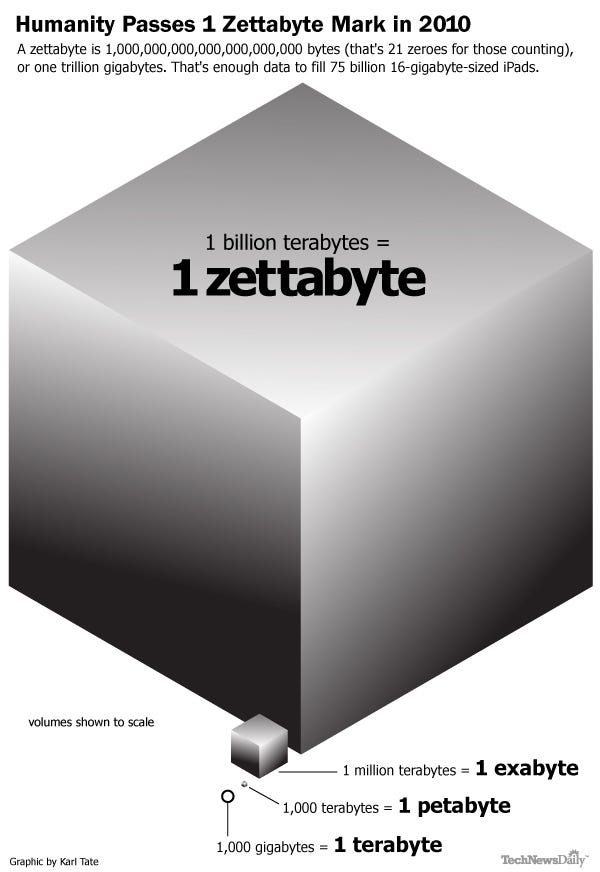
Source: Apixel
Additionally, the need for data storage is growing in many industries, but primarily within the use cases of cloud computing and AI.
Cloud Computing
Cloud computing is the act of using the internet to deliver computer services, which can range from servers, storage, databases, networking, software, etc. There are a few key benefits of using cloud computing, but the biggest is that it’s often cheaper as you are not buying hardware and maintaining onsite data centres, but rather tapping into the existing assets of a firm like Microsoft. In today’s internet-centric society, every type of business, no matter industry or size, is likely looking to use some sort of cloud computing service. According to Mordor Intelligence, the cloud computing industry is estimated at US$0.68 trillion in 2024, and is expected to reach US$1.44 trillion by 2029, growing at a compound annual growth rate (CAGR) of 16.40% during the forecast period (2024-2029). Mordor’s market report gives more in-depth analysis of the market growth, but I won’t get into the weeds.
Artificial Intelligence
Artificial intelligence is a massive, exciting area of technological growth, especially seeing the advent of Generative AI. As AI becomes more familiar, industries innovate ways to find new AI functionalities to streamline processes and improve results, and data centres are crucial to delivering and training AI which requires large amounts of computing power. A Statista report outlines the growth this segment is poised to experience.The market size is expected to show an annual growth rate (CAGR 2024-2030) of 28.46%, resulting in a market volume of US$826.70 billion by 2030.
Looking at just these two use cases driving data centre demand, it is clear that the industry is set to grow at a speedy pace, with the two biggest drivers having CAGRs over 15%.
But are we able to keep up with demand?
The reality is no. CBRE’s Q4 2023 Europe Data Centres report details the deficit. In Q4, there was 601 megawatts (MW) of take-up across Europe’s 14 largest markets, however, there was only 561 MW of new supply delivered in the same time period. JLL’s H2 North America report paints a similar reality, where an accelerated demand is leading to limited availability of supply. It’s clear the demand side drivers are strong and experienced in different parts of the world. But why are we having so much trouble building up supply? It would make sense to any investor to consider looking into data centres, right?
Well they are! The same JLL report showcases the 9% CAGR in investment allocations for data centres since 2013. This is also the highest CAGR of investments in any sector other than life sciences.
What are we missing? There is demonstrated demand, and growing and strong investment numbers, so why can’t we keep up still? My personal opinion from reading and research is that it’s the lack of available ‘green’ energy sources to power this growth as the world prioritizes a clean energy transition.
Quantifying this demand
Global data centre electricity demand is accelerating faster than many forecasts anticipated. Gartner now projects worldwide data centre electricity consumption to reach 565 TWh in 2026, up 26% year-over-year, with demand climbing to 702 TWh in 2027 and approximately 290 GW of power demand by 2030, largely driven by AI-optimized servers.
In the United States, data centres currently account for roughly 4–5% of total electricity consumption, but the Electric Power Research Institute (EPRI) estimates that share could rise to 9–17% by 2030, depending on how many announced projects ultimately reach operation. US data centres consumed approximately 177–192 TWh in 2024, and EPRI projects that figure could grow to between 380 and 790 TWh annually by the end of the decade.
The scale of new infrastructure required is unprecedented. McKinsey estimates global data centre capacity demand will grow from approximately 82 GW in 2025 to 219 GW by 2030, a 3.5 times increase in just five years. AI workloads alone are expected to account for roughly 156 GW of that demand by 2030.
Northern Virginia remains the world’s largest data centre cluster and a bellwether for grid constraints emerging across major markets. Utilities throughout the US are reporting record interconnection requests from data centre developers, while power availability has become one of the primary bottlenecks for AI infrastructure deployment. EPRI notes that more than 100 GW of data centre projects are currently seeking grid connections through 2030.
Power availability has and will continue to become the critical constraint in scaling AI—lets hone in on that.
The Nuclear Comeback
Chris Sharp, the chief technology officer at Digital Realty, a US business covered this topic quite extensively in an interview with BBC. He first outlines the difference AI makes in the power consumption at data centres stating, “a normal data centre needs 32 megawatts of power flowing into the building. For an AI data centre it’s 80 megawatts.” As we have explored above, there’s a massive difference in the consumption requirements for data centres working to meet the demand for AI services. Chris also outlines how power consumption is the “biggest problem” data centre operators currently face. He touches on the nuclear solution, which utilizes small modular reactor (SMR) technology elaborating that “all the major operators are interested” in deploying this technology. And, as predicted, major firms are making clear moves towards developing nuclear powered data centres.
A Quick Intro to Small Modular Reactors
SMRs create new opportunities for the widespread implementation of nuclear energy and I want to walk through exactly what they are and why they create these new opportunities.
By definition, SMRs have a “maximum output of 300 Megawatt electric (MWe) and can produce 7 200 000 kWh per day.” Larger reactors often produce 1000 MWe (1 GW). SMRs have three main advantages in comparison to our standard nuclear reactor according to the European Commission:
As they are smaller in size, power output and capacity, they need less space and less cooling water, but offer greater flexibility for site selection than large nuclear plants.
They are modular and can be produced in series, which allows for production cost efficiency through economies of scale.
As their systems and components can be factory-assembled, they can be transported as modules or even whole units to a location, reducing installation costs.
Knowing this, let’s dive into some examples of how companies are utilizing nuclear energy to power data centres.
Examples of Nuclear Data Centre Development
In a recent job posting, Microsoft described a role for someone to “lead project initiatives for all aspects of nuclear energy infrastructure for global growth.” In particular, Microsoft alluded to an individual to formulate a plan for SMRs in the scheme of their operations. Bill Gates also happens to be a founder of TerraPower, a nuclear start-up exploring SMR technology. Considering the volume of AI related initiatives at Microsoft’s Surface Event, it is clear that their business’ orientation towards AI may have motivated this strategic decision to identify nuclear solutions. This January, Microsoft concluded their hiring for this position, hiring an energy veteran Erin Henderson from the Tennessee Valley Authority. Erin has led transmission projects for over a decade and also served as the performance improvement manager at the Watts Bar Nuclear Plant (2,332MW) and as site licensing manager and director of plant support at the Sequoyah Nuclear Plant (2,440MW).
Amazon, another company relying on data centre assets for their cloud computing services, has taken a slightly different approach. Amazon recently purchased a nuclear data centre, named Cumulus Data Assets, from Talen Energy. Talen Energy itself is not a data centre operator, but a nuclear power plant operator and a majority owner of the sixth largest nuclear power plant in the US, the Susquehanna plant. As part of this agreement, Talen Energy will supply the data centre, with a consumption of 960-megawatts, with power directly from the Susquehanna plant. Due to the proximity of the plant relative to the data centre and the structuring of the deal, Amazon has been able to circumvent all the issues laid out beforehand regarding interconnection. Transmission, and the largest issue, lack of energy supply. As it happens, this nuclear solution is also aiding Amazon in reaching its net-zero goal, capitalizing on the sustainability of nuclear energy.
It’s clear tech giants are confident in exploring nuclear energy as a solution to power their ever growing need for data centres.
Nuclear energy, as explored in one of my previous articles, is a reliable, sustainable source of energy making a strong comeback. Its ability to generate large amounts of power and innovations like SMRs enabling lower CapEx and smaller scale generators are making the technology a feasible solution to meet the massive demand of data centres due to AI and cloud computing services.
The backlog of energy supply in the US compared to the demand predicted has led large firms to directly pursue new solutions to meet their power needs. I found it particularly interesting that tech giants are directly becoming involved in the proliferation of nuclear energy technology and from what I researched, it seems this is just the beginning.
 | A guest post by
|